Language
 Mastech EN
Mastech EN
Mastech EN
Contact vs Non-Contact Tachometers: Which Is Better?
If you need to measure rotational speed (RPM), choosing the right tachometer is essential. One of the most common questions is:
Should you use a contact or non-contact tachometer?
Both types get the job done—but they work very differently and are suited for different situations.
In this guide, we’ll break down the differences, pros and cons, and help you decide which option is best for your needs.
What Is a Tachometer?
A tachometer is a device used to measure RPM (revolutions per minute)—how fast something is spinning.
You’ll commonly use it for:
What Is a Contact Tachometer?
A contact tachometer measures RPM by physically touching the rotating object.
How It Works:
Advantages of Contact Tachometers
Disadvantages
What Is a Non-Contact Tachometer?
A non-contact tachometer measures RPM using a laser or optical sensor—without touching the object.
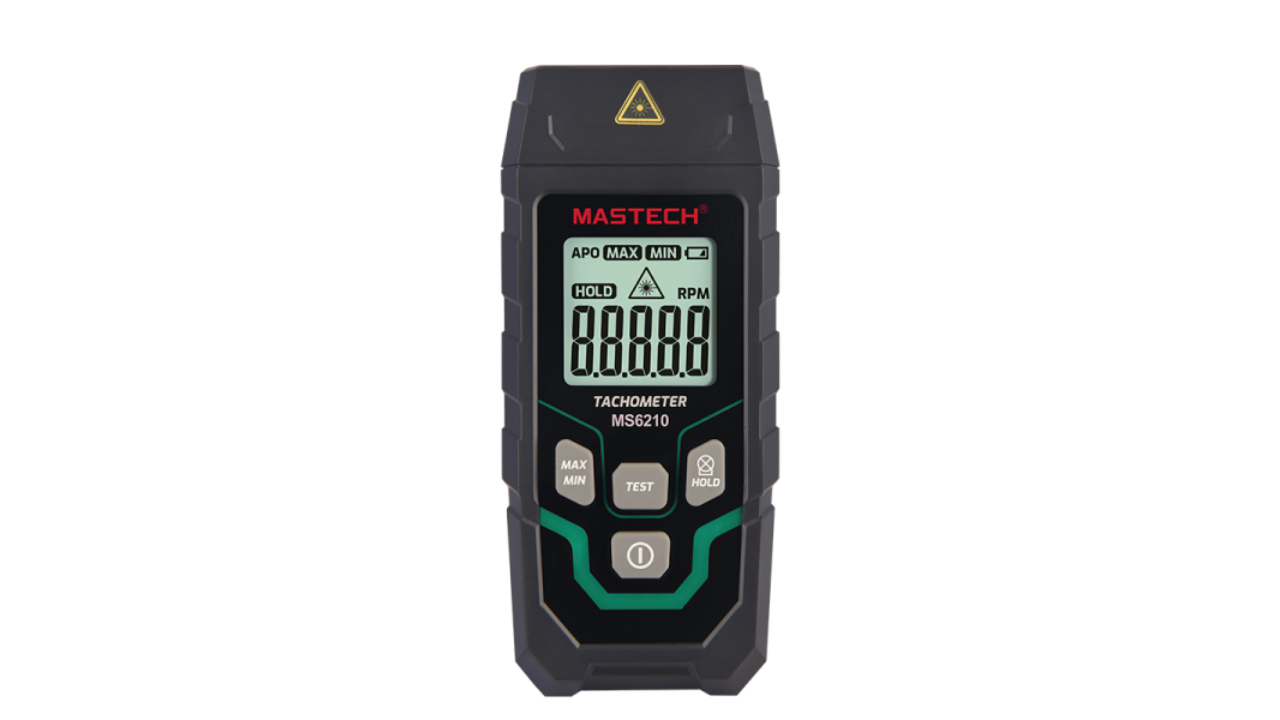
A great example is the Mastech MS6210 Non-Contact Tachometer, designed for safe and accurate RPM measurement.
How It Works:
Advantages of Non-Contact Tachometers
Disadvantages
Key Differences at a Glance
|
Feature |
Contact Tachometer |
Non-Contact Tachometer |
|
Measurement Method |
Physical contact |
Laser / optical |
|
Safety |
Lower |
Higher |
|
Ease of Use |
Simple |
Very easy |
|
Accuracy |
Good |
Very high |
|
High-Speed Use |
Limited |
Excellent |
|
Hard-to-Reach Areas |
Difficult |
Easy |
Which One Should You Choose?
Choose a Contact Tachometer if:
Choose a Non-Contact Tachometer if:
For most modern applications, non-contact tachometers are the preferred choice.
Why the Mastech MS6210 Is a Smart Choice
The Mastech MS6210 Non-Contact Tachometer combines:
It’s ideal for:
Simply aim, measure, and get instant RPM readings—no contact required.
Real-Life Example
Imagine measuring a fast-spinning motor:
This is where tools like the MS6210 really stand out.
Common Mistakes to Avoid
Small setup details make a big difference in accuracy.
Final Thoughts
Both contact and non-contact tachometers have their place—but the best choice depends on your application.
If you value safety, speed, and convenience, a non-contact tachometer is the way to go.
With tools like the Mastech MS6210, measuring RPM becomes simple, reliable, and efficient—whether you’re a beginner or a professional.
2026-04-15
 Mastech CN
 Mastech TW